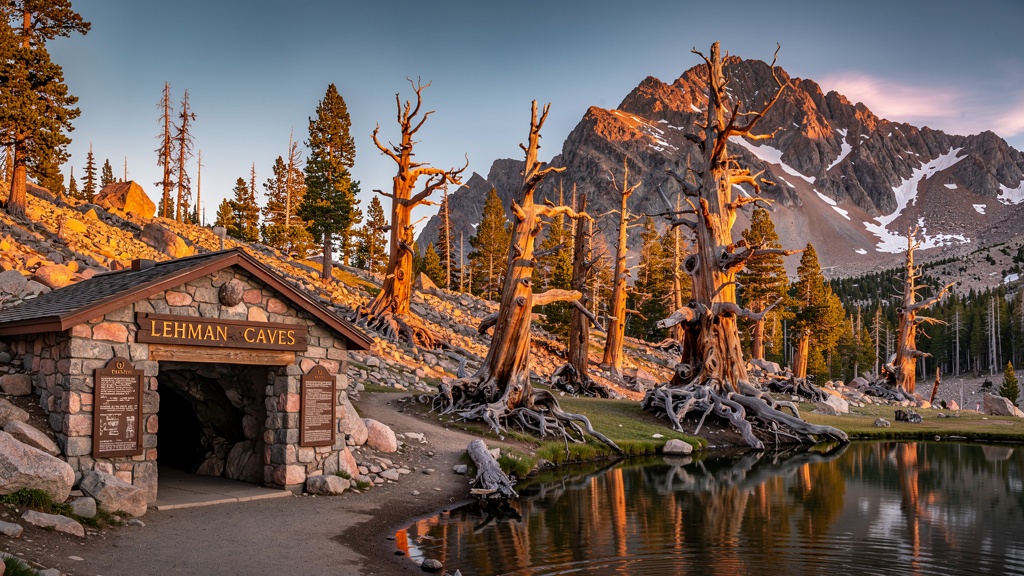
Great Basin National Park Nevada with bristlecone pine trees and Wheeler Peak mountain
Nevada's Natural Wonders

National Parks & Monuments of the Silver State

From ancient caves carved by underground rivers to fire-red sandstone cathedrals millions of years old — Nevada's natural landscapes are among the most spectacular on earth.

Nevada's Wilderness: Ancient, Dramatic, Unforgettable

Nevada is one of the least-visited states for national parks, a fact that is simultaneously the traveller's greatest gift and the state's best-kept secret. While crowds queue for hours at Yosemite, Zion, and Yellowstone, Nevada's extraordinary natural areas — some of equal geological drama and scenic splendour — welcome visitors in relative solitude. At Great Basin National Park, one of only 63 designated national parks in the United States, it is entirely possible to hike for hours through ancient forests and across alpine meadows without seeing another human being. This combination of world-class natural spectacle and genuine wilderness solitude is increasingly rare in the American West and makes Nevada's parks exceptionally precious.

Nevada contains one national park (Great Basin), multiple national monuments and recreation areas, and a rich system of state parks that collectively protect some of the most extraordinary geology, ecology, and astronomy in North America. The state's geological history — spanning nearly four billion years and encompassing episodes of volcanic eruption, ancient sea flooding, tectonic uplift, and glacial erosion — has left a physical record of almost incomprehensible richness visible in its rocks, canyons, caves, and mountains.

The Nevada landscape also holds extraordinary ecological significance. The state's basin-and-range geography creates a series of isolated mountain ranges — sometimes called "sky islands" — that act as refugia for plant and animal species that evolved in isolation over thousands of years. The Lehman Caves at Great Basin National Park preserve some of the most elaborate and pristine speleothem formations in the world, while the ancient bristlecone pine forests of Wheeler Peak contain individual trees that are among the oldest living organisms on Earth — some more than 4,000 years old and still growing.

Great Basin National Park in Nevada showing ancient bristlecone pines and Wheeler Peak

Great Basin National Park: Ancient Wonders Beneath the Desert Sky

Great Basin National Park, established in 1986 and located near the Nevada-Utah border in the remote Snake Range of eastern Nevada, is one of the least-visited national parks in the contiguous United States — and one of the most extraordinary. The park encompasses a remarkable vertical range of ecosystems, ascending from the sagebrush-dotted Great Basin desert floor at approximately 6,000 feet elevation to the summit of Wheeler Peak at 13,063 feet, the second-highest peak in Nevada.

The geological centrepiece of Great Basin National Park is the Lehman Caves — an extraordinary limestone cave system discovered in the 1880s by rancher Absalom Lehman and one of the most outstanding cave systems in the entire National Park Service. The caves preserve an exceptional collection of speleothems — mineral formations created over hundreds of thousands of years by the patient work of calcium-laden water dissolving and re-depositing limestone in forms of extraordinary beauty and variety.

The Lehman Caves contain some of the finest examples of cave shields in the world — disc-shaped formations that grow horizontally from cave walls in defiance of gravity, sometimes reaching five feet in diameter. The caves also shelter elaborate stalactites and stalagmites, cave popcorn, cave bacon (thin, translucent mineral sheets), and cave pearls — spherical formations created when calcite crystallises around a grain of sediment in a cave pool. The density and preservation of these formations at Lehman is matched by very few cave systems anywhere in the world.

Above ground, Wheeler Peak's bristlecone pine grove contains trees of almost incomprehensible antiquity. The Great Basin bristlecone pine (Pinus longaeva) is the longest-lived tree species on earth, and the groves near Wheeler Peak contain individual specimens over 4,000 years old — trees that were already ancient when the pyramids of Egypt were being built, that witnessed the rise and fall of the Greek and Roman civilisations, and that are still alive today. The most famous of these trees, called Prometheus, was unfortunately cut down by a researcher in 1964 and was found to be 4,862 years old — it remains the oldest tree ever definitively aged.

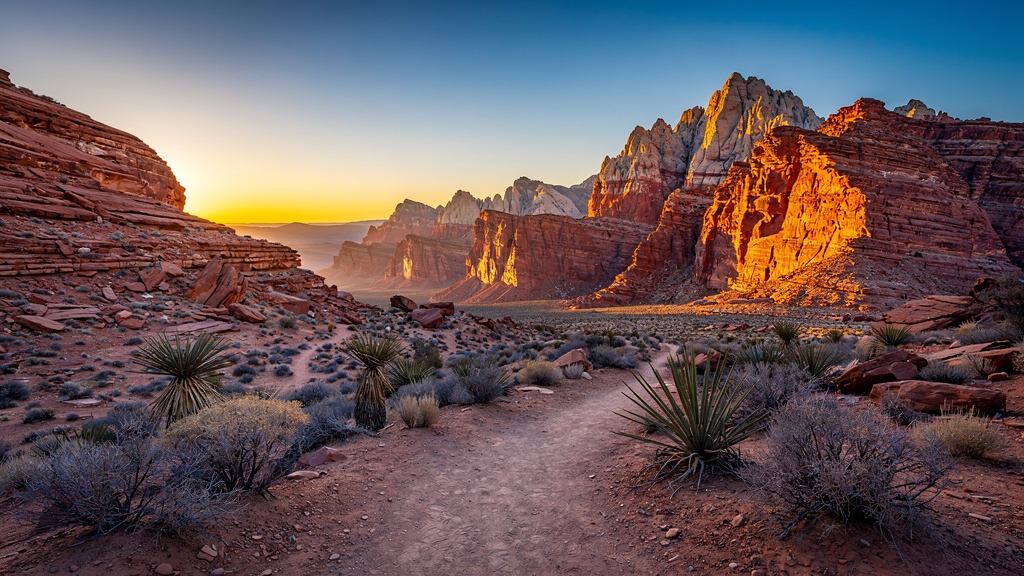
Young woman exploring Valley of Fire State Park in Nevada surrounded by vivid red sandstone

Valley of Fire: Where the Earth Burns Red

Valley of Fire State Park, located approximately 50 miles northeast of Las Vegas in the Mojave Desert, is Nevada's oldest and largest state park and one of the most visually spectacular landscapes in the American Southwest. The park derives its name from the red Aztec sandstone formations that dominate its landscape — ancient dunes compressed into rock approximately 150 million years ago that glow with an intensity that makes the landscape appear literally aflame in the golden light of sunrise and sunset.

The sandstone of Valley of Fire tells a story of dramatic geological transformation. The reddish-orange rock was once part of a vast sand sea — an erg — similar to the Sahara Desert, covering much of what is now the American Southwest during the late Triassic and Jurassic periods. Over millennia, the sand dunes were buried, compacted, and lithified into the Aztec Sandstone formation, which was subsequently uplifted and exposed by millions of years of tectonic activity and erosion. The crossbedding patterns visible in the rock faces — diagonal lines created by ancient wind patterns in the original dune field — are a direct record of wind direction in the Jurassic desert, preserved in stone.

The park's most iconic formation, Elephant Rock, is a natural arch of reddish sandstone shaped remarkably like an elephant, accessible via a short, easy trail from the main road. The Beehives, a cluster of rounded sandstone domes near the park entrance, demonstrate the erosional forces that have shaped the landscape over geological time. The Arch Rock formation, reached via a longer hike, presents a natural sandstone arch framing a view of the surrounding desert that has become one of the most photographed landscapes in Nevada.

Valley of Fire also preserves one of the most significant collections of petroglyphs in the American Southwest. The Atlatl Rock site, featuring a prominent panel of ancient rock art accessible via a staircase, contains carvings of the atlatl — the spear-throwing device that preceded the bow and arrow — alongside human figures, bighorn sheep, and abstract geometric patterns. The Mouse's Tank trail, a mile-long route through a sandy wash, passes multiple petroglyph panels that the ancestral Puebloan and Basketmaker peoples carved into the dark varnish coating the sandstone walls over a period spanning thousands of years.

Red Rock Canyon Nevada with dramatic red and cream sandstone cliffs at sunrise

Red Rock Canyon: Ancient Cliffs on Vegas's Doorstep

Red Rock Canyon National Conservation Area, managed by the Bureau of Land Management and located just 17 miles west of the Las Vegas Strip, is one of the most accessible and spectacular geological landscapes in the United States. The canyon's defining feature is the Keystone Thrust Fault — a geological boundary along which ancient grey limestone has been thrust over younger red sandstone, creating the dramatic colour contrast visible in the canyon's iconic escarpment: pale grey Cambrian-era limestone (approximately 600 million years old) sitting atop younger, vivid red Jurassic Aztec Sandstone (approximately 180 million years old).

For rock climbers, Red Rock Canyon is nothing short of paradise. The canyon contains over 2,000 documented climbing routes across hundreds of individual rock faces, ranging from beginner-friendly single-pitch routes accessible to anyone with basic climbing instruction to multi-day big wall routes that challenge experienced climbers at the highest levels of the sport. The Calico Hills section of the canyon, visible from the Scenic Drive, offers an exceptional concentration of high-quality climbing routes on superb sandstone, while the taller walls of the Rainbow Wall, Crimson Chrysalis, and Solar Slab areas provide multi-pitch climbing experiences of extraordinary quality.

Hikers who are not climbers find Red Rock Canyon equally rewarding. The 13-mile one-way Scenic Drive traverses the most spectacular section of the canyon and provides access to numerous hiking trails ranging from the very easy to the strenuous. The Calico Tanks trail (2.5 miles roundtrip) leads through red rock formations to a natural water tank and panoramic views that encompass the Las Vegas Valley. The Turtlehead Peak trail (5 miles roundtrip with 2,000 feet of elevation gain) is the most challenging day hike in the park, rewarding those who complete it with one of the finest views in southern Nevada.

The Conservation Area also supports a surprisingly rich wildlife community. Desert bighorn sheep are frequently seen on the canyon's rocky slopes, particularly in the early morning and evening hours. Coyotes, kit foxes, Gila woodpeckers, and a remarkable diversity of lizard species inhabit the desert scrub of the valley floor. During spring, when the desert wildflowers are in bloom, the contrast between the vivid red rock and the yellow, purple, and white flowers of the blooming desert scrub creates a sensory experience of extraordinary beauty.

Lake Mead: America's Largest Reservoir

Lake Mead National Recreation Area, the largest national recreation area in the United States by area, straddles the Nevada-Arizona border and encompasses the remarkable landscape created by the construction of Hoover Dam on the Colorado River. Lake Mead itself, the reservoir behind the dam, was the largest artificial reservoir in the United States by volume when it was created in the 1930s, and it remains one of the largest in the world. The lake's blue-green water, set against the context of the Mojave Desert and the dramatic geology of the surrounding canyon country, creates a visual landscape of considerable beauty and complexity.

The recreation area offers an extensive array of water-based activities: boating, jet skiing, wakeboarding, fishing, kayaking, and paddleboarding are all popular on Lake Mead's 550-mile shoreline. The fishing is particularly noteworthy — Lake Mead supports populations of striped bass, largemouth bass, smallmouth bass, black crappie, channel catfish, and several other species, and produces trophy-sized catches on a regular basis. Several marinas around the lake's perimeter offer boat rentals, guided fishing tours, and water sports equipment hire for visitors who arrive without their own equipment.

Hoover Dam itself, the engineering marvel that created Lake Mead, is one of the great monuments of American infrastructure and deserves a substantial visit. The dam was built between 1931 and 1936 by a consortium of construction companies employing thousands of workers during the depths of the Great Depression, and its completion required innovative construction techniques, unprecedented organisational logistics, and a workforce whose courage and skill were equal to the scale of the challenge. The dam's Art Deco architectural detailing — unusual for a utilitarian structure of this scale — reflects the era's belief that functional infrastructure could and should aspire to aesthetic grandeur. Tours of the dam's interior are offered daily and reveal the remarkable engineering of the hydroelectric generators, penstock tunnels, and powerplant that continue to generate electricity for Nevada, Arizona, and California.

More Nevada Parks & Protected Landscapes

Nevada's park system extends well beyond its most famous properties. Cathedral Gorge State Park in eastern Nevada is one of the state's most unusual and visually striking landscapes — a canyon carved by erosion into the soft bentonite clay deposits of an ancient lake bed, creating a labyrinthine network of narrow slot canyons, spire formations, and cave-like alcoves. The soft, pale grey clay of Cathedral Gorge erodes into forms of extraordinary delicacy and variety: some sections resemble Gothic cathedral architecture, others suggest abstract sculpture, and others create narrow passages barely wide enough to walk through. The park sees relatively few visitors compared to the state's better-known destinations, making it one of Nevada's best-kept geological secrets.

Berlin-Ichthyosaur State Park in central Nevada combines geological and paleontological significance in a single location. The park preserves the fossil remains of Shonisaurus popularis — an ichthyosaur species unique to Nevada and one of the largest marine reptiles that ever lived, reaching lengths of up to 50 feet. The fossils were discovered in 1928 and the excavation site has been preserved largely as found, with the bones visible in their original positions within the rock matrix. The town of Berlin, a largely intact nineteenth-century silver mining settlement on the park grounds, adds a human historical dimension to the paleontological interest.

Cave Lake State Park near Ely in eastern Nevada offers a high-desert reservoir environment popular with anglers seeking brown and rainbow trout in a setting of striking mountain scenery. The park's campgrounds are among the most peaceful in the state, situated in a canyon surrounded by pinyon-juniper woodland and accessed via a scenic highway that traverses some of the most remote and beautiful country in Nevada. For visitors making the drive across US Highway 50 — "The Loneliest Road in America" — Cave Lake State Park is an excellent stop combining natural beauty with comfortable camping facilities.

Nevada's Dark Skies: Astronomical Paradise

One of Nevada's most extraordinary natural assets is one that is completely invisible during the day: its darkness. Nevada contains some of the darkest skies in the continental United States, a consequence of the vast areas of uninhabited desert and mountain terrain that have no artificial lighting. The Great Basin Desert, which covers most of central and eastern Nevada, is so sparsely populated and so remote from major urban centres that its night skies approach the conditions of pre-industrial darkness — a quality that is becoming vanishingly rare anywhere in the developed world.

Great Basin National Park has been officially certified as an International Dark Sky Park by the International Dark-Sky Association — a designation that recognises sites where the preservation of natural darkness has been formally committed to and where the quality of night sky visibility meets defined astronomical standards. On a clear, moonless night at Great Basin, the Milky Way is not merely visible as a faint band of light but blazes across the sky in its full three-dimensional glory, its dust lanes and star clouds visible to the naked eye. The Andromeda Galaxy, some 2.5 million light-years distant, is easily visible without optical aid. The park hosts regular astronomy programmes led by park rangers and volunteer astronomers, offering telescope viewing and educational talks on the science and culture of the night sky.

The Nevada Triangle — the remote area of central Nevada between Tonopah, Ely, and Winnemucca — offers perhaps the best sustained dark sky conditions in the lower 48 states. The Burning Man festival, held annually in the Black Rock Desert north of Reno, draws thousands of dedicated stargazers who come in part for the extraordinary spectacle of the desert night sky. Observers under perfectly dark skies can typically count over 3,000 individual stars with the naked eye, compared to the 10–30 stars visible from a major city like Las Vegas under typical conditions.

🌿 Leave No Trace: Nevada's parks and wilderness areas are fragile ecosystems that require thoughtful visitation. Stay on designated trails, pack out all trash, never touch or remove archaeological artefacts or fossils, and always check fire restrictions before lighting any open flame. The desert landscapes of Nevada are far more delicate than they appear — cryptobiotic soil crusts, which appear as dark, irregular patches on the desert surface, can take decades to recover from a single footstep.

Planning Your Nevada Park Visits

Nevada's national and state parks require somewhat different preparation than urban tourist destinations, and investing time in advance planning pays significant dividends. The most important practical consideration for all Nevada outdoor travel is water. Even in spring and autumn — the most pleasant seasons for park visits — the desert environment is significantly drier than most visitors are accustomed to, and dehydration can progress from a mild inconvenience to a medical emergency within a few hours of strenuous activity. Plan to carry at minimum one litre of water per hour of hiking during warm weather, and double that in summer.

The national park pass — the America the Beautiful Annual Pass, available for $80 per year — provides unlimited access to all federally managed lands including national parks, monuments, and recreation areas. For visitors planning to visit even two or three federal sites in Nevada, the pass pays for itself immediately and eliminates per-vehicle entry fees at all covered sites. The pass is available at any federal visitor centre or online from the National Park Service website.

Campsite availability has become a genuine challenge at many popular parks, with the surge in outdoor recreation that followed the COVID-19 pandemic pushing reservation systems to their limits. Great Basin National Park is a notable exception — it maintains a first-come, first-served policy for most of its campgrounds, making it one of the few major national parks where spontaneous overnight visits without months of advance planning are still feasible. Valley of Fire State Park's campgrounds, conversely, fill quickly on weekends and holidays and benefit from advance booking through the Nevada State Parks reservation system.

Wildlife encounters are a possibility at all Nevada's parks and should be approached with respect and caution. Desert bighorn sheep, mule deer, coyotes, and various species of rattlesnakes inhabit the park landscapes and are best observed from a respectful distance without interference. Rattlesnakes in particular deserve careful awareness: they are generally not aggressive and will avoid humans when possible, but hikers who step off trails or reach into rock crevices without looking first risk accidental encounters. Heavy boots and watchful hiking practices eliminate the vast majority of risk from desert snake encounters.